How JTeles Turned 126,000 Cloth Into Rust's Biggest Farm in a Single 2026 Wipe
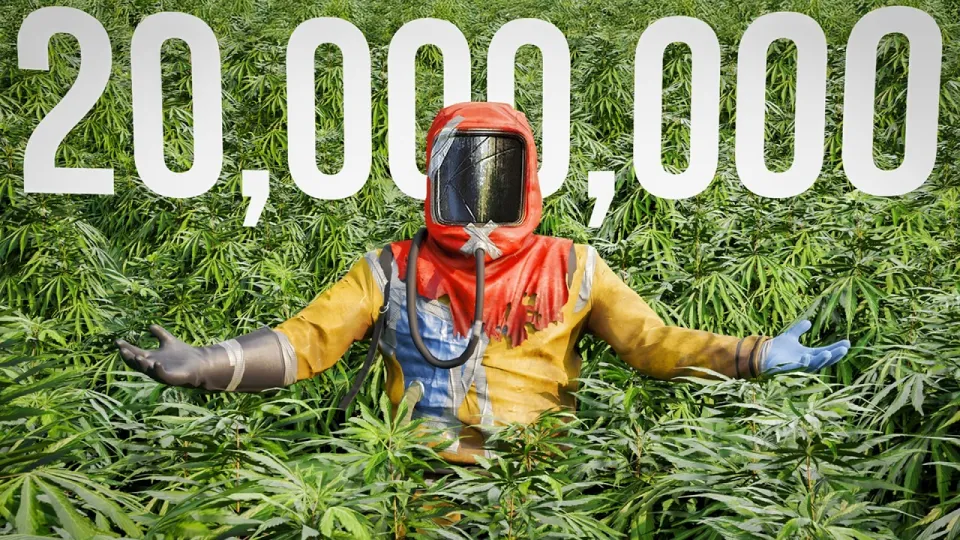
Video: I Became Rust's #1 Farmer...
You can order the same kind of articles for your own video to boost it on YouTube and Google. Just message the Telegram bot @sat_sit_bot. It writes articles around your video, embeds the video and publishes them on popular niche websites (no ads). Your first 50 articles are free.
· based on the channel JTeles
Farming 20,000,000 cloth in a single Rust wipe is possible if you start with 126,000 cloth, recruit a server full of viewers and build a mega farm fast — that is exactly the route JTeles took in his attempt to become Rust's #1 farmer. The project ran for 7 days on one wipe, with a viewer-built compound at its center and a hostile clan trying to tear it down. Anyone who wants to follow the same path can start with the same free-to-play War Thunder registration bonus the channel promotes.
What the 20,000,000 cloth challenge actually involves
Cloth in Rust comes from hemp plants, and scaling it to eight figures is a logistics problem more than a combat one. JTeles opened the wipe with 126,000 cloth already banked and set a target of 20,000,000 before the wipe ended — roughly 160 times the starting amount. Hitting that number in 7 days means the farm has to run almost continuously, which is why the plan depended on other players rather than a solo grind.
Key numbers behind the attempt:
- Starting stock: 126,000 cloth.
- Target: 20,000,000 cloth.
- Time window: one wipe, 7 days.
- Workforce: viewers invited onto the server as farmers, builders and defenders.
- Threat level: an organized clan actively working to stop the farm.
Cloth has real value in Rust beyond the raw count — it feeds into low-grade fuel production, clothing, medical items and bartering — so a stockpile that size is both an economic weapon and a giant target.
How the biggest cloth farm in Rust was built
The farm was a community project: viewers joined the server and were put to work planting, harvesting and expanding the compound. Instead of a handful of planters tucked behind a base, the build grew into an industrial-scale site with rows of hemp and the infrastructure to process it. The scale became a talking point on its own — the compound got so large and built-up that looking at it visibly lagged the server.
Running a farm of that size requires the boring parts to be handled properly, and viewers noticed the details: clean, organized cable management for the power and automation, and a layout that could keep expanding without breaking. Automation is what makes a cloth operation of this size realistic, because hand-planting and hand-harvesting thousands of plants is where most players give up. One viewer recalled an older approach — a 1,008-planter farm built before the plant-all and harvest-all updates, planted and harvested one plant at a time, three hours each way, for 17.4 million cloth. That is the manual ceiling; the modern version leans on automation and manpower instead.
The clan war that turned farming into PvP
Building Rust's biggest farm made enemies quickly. A large Russian clan learned what was being attempted and did everything it could to stop it, which pulled the project into raids, base defense, open PvP and shifting alliances across the server. A cloth empire is a slow, stationary target, and a compound full of plants and boxes is exactly what raiders want to find.
The defense did not stop when JTeles logged off. Clanmates held the fort while he was offline and asleep, defending the base and keeping the operation alive — the kind of contribution that decides whether a wipe-long project succeeds or collapses overnight. That round-the-clock coverage is the difference between a solo farmer who loses everything at 4 a.m. and a group that can absorb a raid and keep going.
Typical questions from viewers about the run
Viewers watching a wipe-long project tend to ask the same practical things, and the answers explain why the format works.
- How long did this take in real time? The challenge was framed as 7 days of wipe time, but the hours behind it are far higher once farming, building, defending and editing are counted. Long-form Rust projects routinely run into dozens of hours of raw footage.
- Did he sleep? Yes — and that is precisely why the clan mattered. The base was guarded while he was offline, so the farm kept producing without him.
- Why cloth and not scrap or sulfur? Cloth is renewable, scales with automation and space rather than luck, and can be converted into useful items. It is one of the few resources where a big enough farm compounds instead of running dry.
- Is the compound really that big? Big enough that rendering it caused noticeable server lag when players looked at it, which is a strange badge of honor for a farm base.
- Could a solo player copy this? Partly. The automation and layout ideas transfer, but the 20,000,000 target depends on a crew — the viewer clan was the real engine of the run.
Why this run stands out among Rust farming videos
Most Rust farming content is a highlight reel of a big base and a lucky wipe. This one is structured as a race with a fixed number attached: 126,000 cloth in, 20,000,000 out, 7 days to do it, and an enemy clan trying to make sure it never happens. The tension comes from the mismatch between a peaceful, slow activity and the server politics that surround it.
The scale also produces moments that only happen when a farm gets out of control — a compound so dense it drags the server, defenders holding a base against organized raiders while the owner sleeps, and a resource count that turns a survival game into an economy simulation. For players who enjoy the industrial side of Rust more than the shooting, it is a rare look at what that side looks like when it is pushed to the limit.
All links from the video
- War Thunder free-to-play signup for PC and consoles: https://wtplay.link/jteles
- War Thunder mobile signup: https://wtm.game/jteles
- JTeles Discord community: https://discord.gg/jteles
- Twitter/X: https://twitter.com/xJTeles
- TikTok: https://www.tiktok.com/@xjteles
Final thoughts on Rust's cloth farming record attempt
Turning 126,000 cloth into a 20,000,000 target inside one 7-day wipe is a group achievement as much as a solo one, and the run shows how far Rust's farming systems can be pushed when automation, layout and manpower line up. The hostile clan, the offline defenses and the server-lagging compound all come from the same decision: build bigger than anyone else on the server. JTeles documents the whole climb in the video breakdown above, and if you want to try a different kind of free-to-play grind in the meantime, you can claim the War Thunder bonus here.
Key takeaways
- JTeles started the wipe with 126,000 cloth and set a goal of 20,000,000 cloth in 7 days.
- Viewers were invited onto the server to build what was billed as the biggest cloth farm in Rust.
- A large Russian clan found out about the project and tried to stop it with PvP, raids and base defense fights.
- The finished compound grew so large that looking at it lagged the server.
- Clanmates defended the base while JTeles was offline and sleeping, keeping the farm running around the clock.
Questions & answers
How much cloth did JTeles farm in the video?
The challenge started with 126,000 cloth and aimed at 20,000,000 cloth within a single 7-day wipe. The goal was to become Rust's #1 farmer, which required a viewer-built mega farm running almost continuously.
Why did a clan attack the cloth farm?
A large Russian clan found out about the attempt to build the biggest cloth farm in Rust and tried to stop it. That led to raids, base defense fights, PvP and shifting alliances across the server for the length of the wipe.
Can a solo player farm millions of cloth in Rust?
It is extremely slow without help, because planting and harvesting by hand eats hours — one player reported six hours total for a 1,008-planter farm that yielded 17.4 million cloth before the plant-all and harvest-all updates. Modern automation plus a crew is what makes a 20,000,000 target realistic in one wipe.
Who defended the base while JTeles was offline?
His clanmates held the compound while he was offline and sleeping, defending it against raids so the farm kept running. That round-the-clock coverage is what separates a wipe-long group project from a solo base that gets wiped overnight.
Source: I Became Rust's #1 Farmer... · Markdown version